Emergency water extraction
Pumping and high-volume extraction for standing water, plus targeted removal at carpet, pad, and hard-surface seams to reduce what soaks into the structure.
Serving Temecula, California & surrounding areas
24/7 Emergency Response
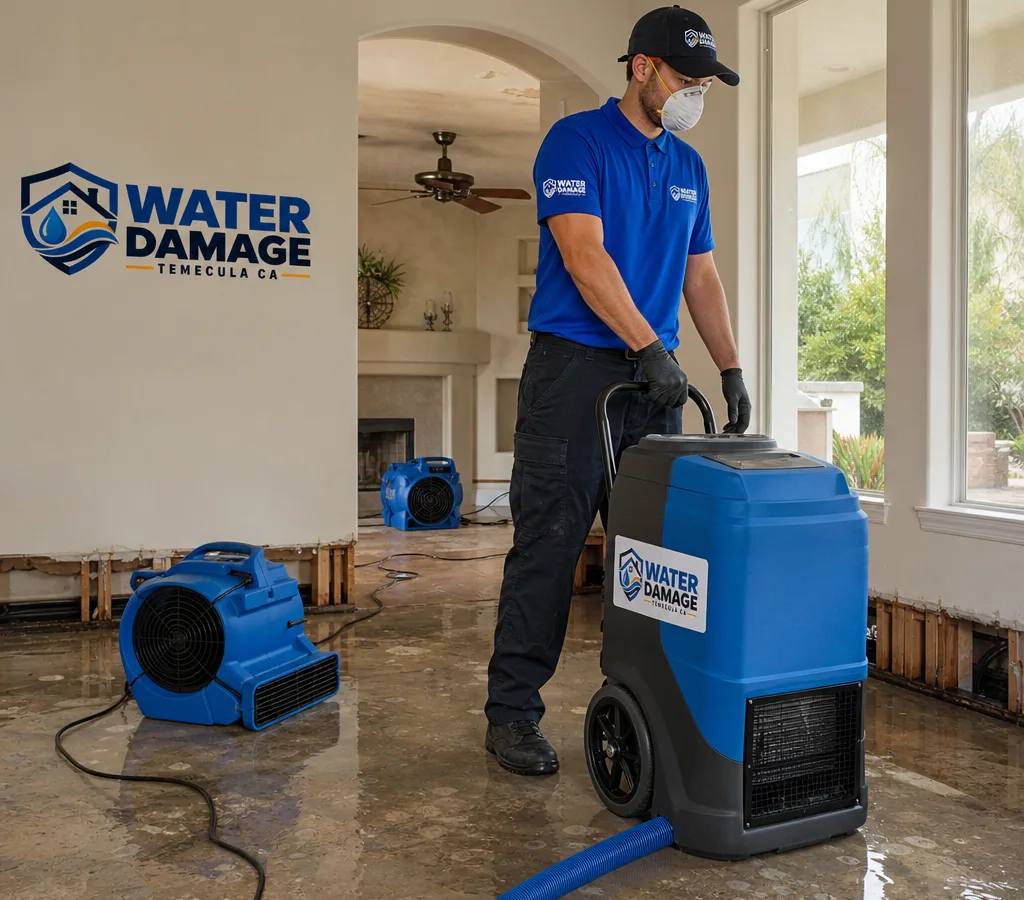
Water restoration in Temecula
Get a rapid on-site assessment, a clear drying plan, and documentation that protects your property and your claim. We handle cleanup, drying, and rebuild coordination for homes and businesses across Temecula.
✓On-site assessment
✓Moisture mapping
✓Verified structural drying
✓Claim documentation
What homeowners should know
Water spreads fast. Within hours it can wick into drywall, swell trim, loosen flooring, and soak insulation. Temecula water damage restoration is about stopping that chain reaction early: remove what is unsalvageable, extract standing water, dry the structure to a verified target, and restore the affected materials.
At Water Damage Temecula CA, our work starts with an on-site inspection, moisture mapping, and a written scope that explains what happened and what it will take to dry and repair the space. You will know what areas are affected, what equipment is needed, what can be saved, and what needs removal.
Temecula's warm days can speed evaporation at the surface, but that does not mean framing and drywall cavities are dry. We focus on measured drying, not guesswork, using professional extraction, air movement, and dehumidification with ongoing moisture checks until materials reach a safe dry standard.
Response capabilities
Pumping and high-volume extraction for standing water, plus targeted removal at carpet, pad, and hard-surface seams to reduce what soaks into the structure.
Air movers and dehumidifiers sized to the loss, with moisture readings that confirm drying progress in drywall, framing, and affected flooring systems.
When materials cannot be dried safely, we remove only what is necessary, such as a controlled flood cut, and use containment to keep dust and debris localized.
Cleaning of affected surfaces and contents as appropriate, with odor control steps when water sat long enough to create musty conditions.
Photos, moisture logs, and scope notes help document the cause, category, and extent of damage so the claim process is easier to follow.
A practical path from dry-out to repairs, including what needs to be replaced and what can be returned to pre-loss condition.
Measured structural drying
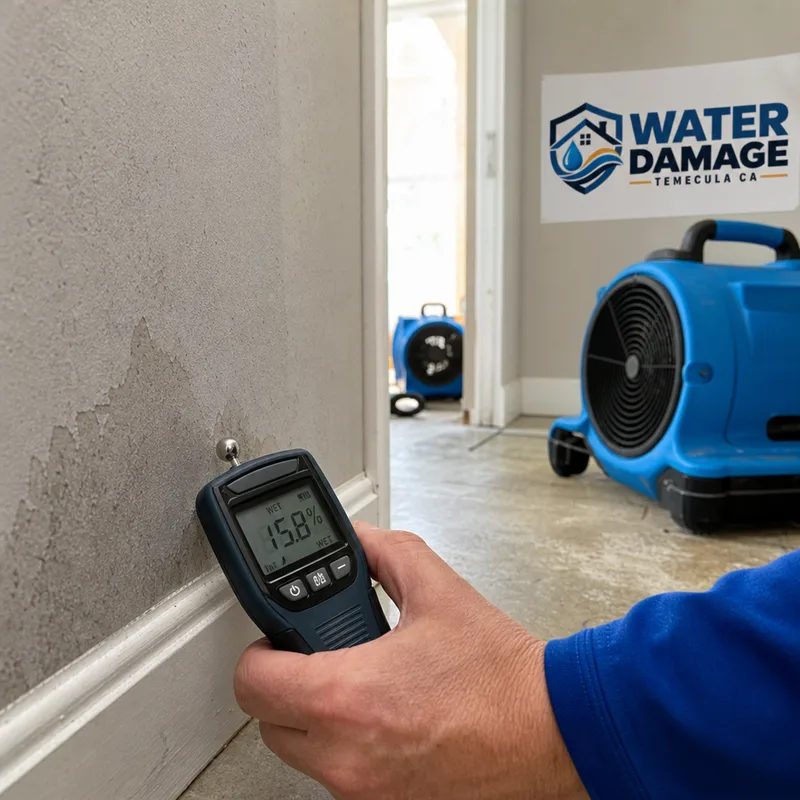
Good restoration is measurable. After the source is stopped or isolated, we classify the loss and set drying goals. That usually means checking moisture in drywall, baseboards, cabinets, subfloors, and framing, then placing equipment to control temperature, humidity, and airflow.
We track progress with moisture readings and adjust equipment as conditions change. If water reached wall cavities or insulation, we may recommend selective removal so the remaining structure can dry completely. This approach reduces the chance of trapped moisture that later shows up as bubbling paint, warped flooring, or persistent odors.
If you are deciding between contractors for water damage restoration Temecula CA property owners can trust, ask how drying is verified and what documentation you will receive at the end. You should get a clear explanation of what was wet, what was removed, what was dried, and what readings support it.
Learn what to expect from the team behind Water Damage Temecula CA and the way we handle inspection-to-restoration communication.
Inspection through restoration
We identify affected materials, map moisture migration, and note safety issues such as wet electrical areas or compromised ceilings.
We remove standing water, pull water from carpet and pad when salvageable, and set initial airflow and dehumidification to stop continued absorption.
If materials cannot be dried safely, we perform selective demolition, such as removing wet baseboards or a measured flood cut, so the structure can dry fully.
We monitor humidity and moisture content, reposition equipment, and keep notes so there is a record of drying progress.
We clean affected surfaces and contents as appropriate and address odor at the source, especially when water sat long enough to create musty conditions.
We confirm dryness, provide documentation, and outline the repair steps to return the space to pre-loss condition.
Understanding the scope
Water damage restoration in Temecula typically ranges from about $1,500 to $7,500 for many residential losses, while larger or more complex jobs can run $10,000+ when demolition, specialty drying, and significant rebuild work are required.
Your price depends on how much area was affected, how long materials stayed wet, the water category—clean versus contaminated—what must be removed to dry properly, and access to affected cavities behind cabinets, under flooring, or inside walls. The exact cost is confirmed after an on-site inspection and moisture mapping.
Customer reassurance
A supply line leaked behind the laundry wall and we didn't realize it until the baseboard started swelling. The crew explained what had to come out, set up drying the same day, and kept a simple log of readings so we knew it was actually drying. It made the insurance part a lot easier.
We had water in a downstairs room after a toilet overflow. They extracted everything, used containment during the cut-out, and the place didn't smell musty afterward. The final walkthrough was straightforward and we knew exactly what repairs were next.
Clear answers before work starts
You should start as soon as the water source is stopped because wet drywall, insulation, and subfloors can absorb water quickly. Early extraction and drying reduces the amount of material that must be removed and helps prevent secondary damage like swelling, delamination, and persistent odors.
Some materials can be dried in place, but removal is common when water has saturated drywall, insulation, toe-kicks, or cabinet bases where airflow cannot reach. A typical approach is selective demolition, such as a controlled flood cut, so wall cavities can dry to a verified target instead of trapping moisture.
Many straightforward losses dry in 3 to 5 days, but timelines vary with how much water entered the structure, what materials were affected—plaster, drywall, hardwood, or tile over slab—and whether water reached cavities under cabinets or behind shower walls. Drying is complete when moisture readings show the structure has returned to an acceptable dry standard.
Yes, we provide the photos, scope notes, and moisture documentation that insurers commonly request so the claim has a clear record of what was wet, what was removed, and how drying was verified. Coverage depends on your policy and the cause of loss, so we keep documentation factual and job-specific.
If the water is contaminated, restoration requires additional safety controls, removal of porous materials that cannot be sanitized, and targeted cleaning and disinfection. We will explain what must be discarded versus what can be properly cleaned, and we will outline containment and disposal steps before work begins.
We can assess moisture patterns and visible symptoms to help narrow down likely paths, then coordinate next steps so the source is found and stopped before drying and restoration proceeds. Restoration works best when the leak is fully corrected first, otherwise moisture can return and extend the loss.
If you have wet floors, swollen baseboards, or moisture behind walls, get an on-site assessment and a written drying plan before damage spreads to surrounding rooms.
Call for Emergency HelpStart with a measured assessment
Tell us what happened and what areas are affected. We will inspect, map moisture, explain what can be saved, and outline the steps to dry and restore the space with documentation you can keep.